Israel in the Second Half of the 20th Century
© Thomas GadeIn my photo archive, there are numerous images from Israel taken by German travelers in the decades following the Second World War. Why did they choose this destination? In the first decades after 1945, encounters with survivors of the Holocaust were unavoidable - survivors of a crime that had deeply shaped and traumatized not only the generation of perpetrators but also their descendants. Jewish refugees from Europe, as well as Jews from Arab countries, had streamed into Israel beginning in 1948. Why would a former member of Hitler’s Wehrmacht travel to Jerusalem in the mid 1950s or visit a kibbutz? The motivations of these now deceased photographers can no longer be asked. Nor do we know what roles and relationships fate had assigned to them.
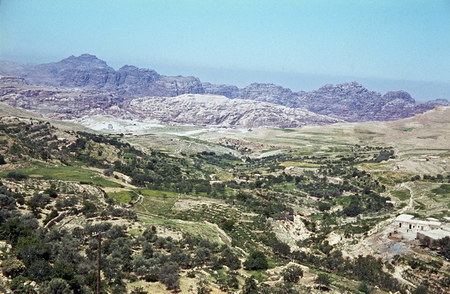
Israel 1965 / Photos: Herbert Schweeger
Photos by Hellmut Münzner
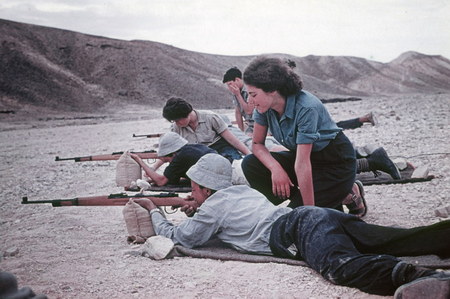
Israel 1969 Color Slides
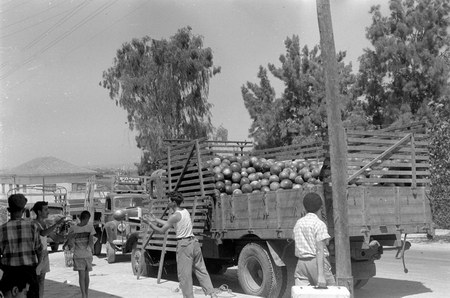
Rehovoth to Sodom 1957
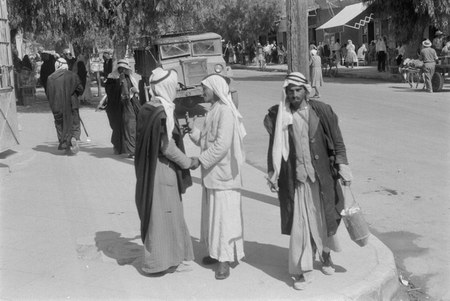
Jerusalem 1957

Jordan / Kibbutz 1957
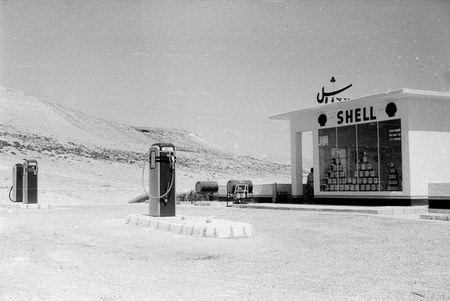
Jericho 1957
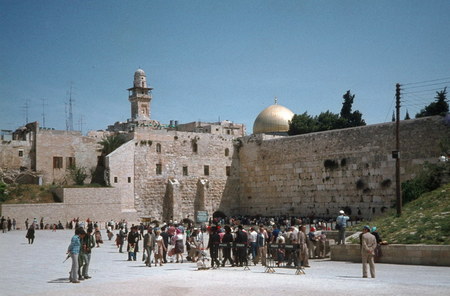
Israel 1969 Jerusalem Color Slides
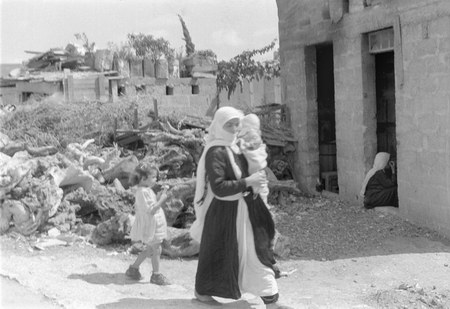
Druze / Jaffa 1957

Tel Aviv 1957
Israel – 20th Century, Second Half – Tourists from Germany
At that time, Israel was not an ordinary travel destination like Venice or the beaches of the Spanish Mediterranean coast. Rather, such a journey was often associated with a deeper meaning. For some, interest in the historical sites of Jewish and Christian traditions likely played a central role. Others consciously sought to confront their own past—a cautious approach to places and people inseparably linked to recent German history. Questions of guilt, responsibility, forgiveness, and possible reconciliation were likely central. At the same time, Israel offered the opportunity to witness a country in the process of formation, a state undergoing rapid change, whose population consisted of people who had often immigrated only recently from Europe, North Africa, or the Middle East.From a German perspective, such a journey could hardly be undertaken without reservations. The Nazi persecution of the Jews was still too recent, and many Israelis had lost relatives or experienced persecution themselves. Precisely for this reason, the photographs taken by German visitors to Israel at that time take on special significance. What do they show? Ancient ruins, the dawn of modernity, or snapshots of a society in transition? Those who made it to the Dead Sea often had themselves photographed—alone or accompanied—floating seemingly weightlessly on the water, made possible by its extraordinarily high salt content. A visit to Jerusalem almost always included the Western Wall, which then as now is a central site of religious and historical importance.
Israel is a comparatively young state whose emergence is closely linked to the political, religious, and social upheavals of the 19th and 20th centuries. Its roots go back to the era of Zionism, a movement that emerged in response to European antisemitism and advocated the creation of a national homeland for the Jewish people. Against the backdrop of increasing persecution and discrimination in Europe, this idea gained growing importance. Many Jews saw in the return to the historic Land of Israel not only a political project but also a cultural and spiritual renewal.
The Promised Land
After the First World War, Great Britain assumed administration of Palestine, and tensions between the growing Jewish population and the resident Arab population increased. The political goals of both groups increasingly conflicted. With the end of the Second World War and the horrors of the Holocaust, international pressure to find a solution intensified. In 1947, the United Nations adopted a partition plan providing for the creation of two states. On May 14, 1948, the State of Israel was proclaimed. This was immediately followed by war with neighboring states, which posed enormous challenges for the young nation and at the same time laid the groundwork for future conflicts.
Wars
In the second half of the 20th century, Israel developed into a modern state under difficult conditions. The first decades were marked by immigration, economic development, and repeated military conflicts. People from Europe, North Africa, and the Middle East came to the country, bringing diverse cultural backgrounds. This diversity had a lasting impact on society, politics, and culture. At the same time, Israel invested heavily in education, agriculture, and technology. The transformation of desert areas into arable land became a symbol of the young state's determination to build and thrive. Foreign visitors were able to witness these developments firsthand.
Politically, the situation remained tense. Wars in 1956, 1967, and 1973, as well as ongoing conflicts with the Palestinians, shaped Israel’s situation. Nevertheless, the country continued to develop economically. From the 1980s and 1990s onward, the technology sector in particular gained importance, earning Israel a reputation as an innovation-driven nation. At the same time, society became more pluralistic, even though tensions between different population groups persisted.
Travel Destination
Despite political uncertainties, Israel also began to establish itself as a travel destination for German visitors. For devout Christians from Germany, places such as Jerusalem, Bethlehem, or Nazareth held historical and spiritual significance. At the same time, many Germans felt a need to confront their own past. Trips to Israel offered the opportunity to learn about Jewish life and to visit a country closely linked to the history of the Holocaust.
On the Path to Modernity
Another factor was the fascination with a country under construction. One could see groups of workers laying large water pipes through the desert—a symbol of the enormous effort to make inhospitable regions livable. At the same time, young people, both women and men, were trained with weapons to prepare for the violent conflicts in the region. For many German visitors, this was an unfamiliar sight that inspired both admiration and reflection.
Israel was seen as an example of dynamism and new beginnings. The development of modern cities, agricultural achievements, and cultural diversity made the country attractive to many visitors. Added to this were the mild climate and varied landscapes, ranging from Mediterranean beaches to desert regions and historic sites.
In the 1960s and 1970s, tourism continued to grow, even though political crises repeatedly caused declines. Tour operators began offering organized tours, particularly aimed at European visitors. German tourists formed an important group. The diplomatic rapprochement between Germany and Israel in the 1960s led to a gradual normalization of relations.
Jerusalem
One of the most important attractions that continues to draw visitors today is Jerusalem. The Old City with its religious sites is a central highlight. The Western Wall, the Church of the Holy Sepulchre, and the Dome of the Rock symbolize the city’s religious significance. Many tourists capture these places in photographs, as they represent a unique connection between history, faith, and the present. The narrow streets, the mixture of languages, and the visible traces of different eras leave a lasting impression on many visitors.
Tel Aviv
Another major destination is Tel Aviv, which presents itself as a modern metropolis on the Mediterranean. The city is known for its Bauhaus architecture, its beaches, and its vibrant nightlife. At the same time, it is considered Israel’s economic center, where start-ups, international companies, and cultural institutions are concentrated. For German travelers, Tel Aviv offered a contrast to the country’s religious sites—a youthful city that provided a view of a modern Israel.
Capital
The two cities were also politically linked in their significance. From the Israeli perspective, Jerusalem has been considered the capital since 1949; in practice, however, Tel Aviv fulfilled this role for many years. Most international embassies were located there. The state apparatus—many key authorities, ministries, and especially economically oriented institutions—was based in Tel Aviv, while the Knesset (parliament) had its seat in Jerusalem. This dual structure reflected the country’s political complexity.
Landscape, History, and Culture
In contrast stands the Negev Desert with its stark beauty and vastness. The Dead Sea also attracts visitors, especially because of its extremely high salt content, which allows for a unique bathing experience. In the 1980s and 1990s, tourism continued to develop. Infrastructure was expanded, hotels modernized, and international flight connections increased. At the same time, interest in cultural and historical travel grew. German visitors increasingly took part in study tours focusing on the country’s history, religion, and politics. The peace processes of the 1990s temporarily led to another increase in visitor numbers. Israel was increasingly perceived as a safe and attractive travel destination. Younger travelers also discovered the country, particularly Tel Aviv with its open and creative atmosphere.
Tourism Despite Many Tensions
Nevertheless, tourism remained vulnerable to political developments. Conflicts and security situations repeatedly had immediate effects on visitor numbers. Overall, it can be concluded that Israel, despite its complex history, has developed into an important travel destination. To this day, the country remains a place that polarizes and where past and present come together in a unique way. It is precisely this tension that makes Israel a fascinating destination for many visitors from around the world. ```